Administrative Structure
Karacasu is one of the districts located in the southeastern part of Aydın, standing out with its historical background, rural character, and cultural heritage. In terms of its administrative structure, the district has gone through different stages from the Ottoman period to the Republican era, and from there to today’s metropolitan municipality system.
According to historical records, Karacasu was first mentioned as a settlement affiliated with the district of Yenişehir during the Ottoman period. In 1864, it became a subdistrict of Nazilli, and in 1867, it was attached to Aydın with district status. This process was one of the important administrative turning points that strengthened Karacasu’s role as a regional center.
In the former administrative structure, there were town municipalities such as Ataeymir, Geyre, and Yenice, along with villages in addition to the Karacasu district center. However, after the 6360 Law, which reorganized the metropolitan municipality system in Türkiye, Aydın gained metropolitan municipality status, and town municipalities and villages within districts were transformed into neighborhoods. Therefore, information such as “4 municipalities and 29 villages” found in older texts no longer reflects the current administrative structure.
Today, Karacasu has one district municipality. There are no longer town or village statuses in the district, as settlements are now affiliated with Karacasu Municipality under neighborhood status. According to the current local administration information provided by Karacasu District Governorship, the district has 1 municipality, 0 towns, 38 neighborhoods, and 0 villages. This structure brings together both the central settlement of Karacasu and its former rural villages and towns under the same municipal framework.
This administrative transformation has also changed the scope of local government services. Roads, infrastructure, cleaning, zoning, environmental planning, social support, cultural activities, and services for rural neighborhoods are now carried out through the division of responsibilities between the metropolitan municipality, the district municipality, and relevant public institutions. For this reason, the current neighborhood-based governance model should be taken as the basis when evaluating Karacasu’s administrative structure, rather than the former town and village system.
Settlement Structure of Karacasu
The settlement structure of Karacasu is closely related to the district’s geographical characteristics. The district developed along a valley extending between Babadağ and Karıncalı Mountain. Its mountainous and rugged terrain is one of the main factors shaping the distribution of settlements and the character of its neighborhoods.
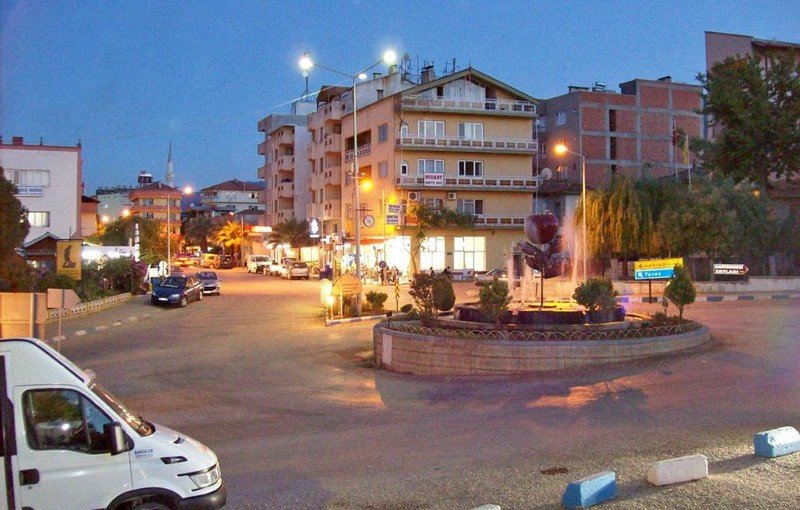
Public institutions, municipal services, commercial areas, educational institutions, and social life are concentrated in the district center. In the surrounding neighborhoods, agriculture, animal husbandry, local production, and rural life are more prominent. This makes Karacasu a settlement that functions as a district center while also preserving its strong rural identity.
Neighborhoods such as Geyre, Ataeymir, Yenice, Yazır, Işıklar, Palamutçuk, Alemler, Ataköy, and Dedeler contribute not only to Karacasu’s administrative boundaries but also to its social and cultural diversity. Each of these neighborhoods adds something different to the district’s historical memory, production patterns, and local way of life.
Social Structure
The social structure of Karacasu is shaped by its historical background, rural production patterns, migration movements, traditional occupations, family and neighborhood relations, and cultural heritage. Compared to large urban centers, the district has a calmer social environment built on stronger local relationships and close community ties.
Family, neighborhood, production, schools, markets, public institutions, and local tradespeople are at the center of social life in Karacasu. The culture of neighborly relations and solidarity, often seen in small settlements, is also evident in Karacasu. Social relations among local people are mostly based on long-standing familiarity, kinship ties, and shared production areas.
However, Karacasu’s social life should not be interpreted merely as a static rural life. The district has cultural diversity shaped by the Ancient City of Aphrodisias, traditional pottery, Karacasu pide, tanning, blacksmithing, natural areas, highlands, and local festivals. These values nourish the social life of Karacasu and strengthen its distinctive local identity.
Housing and Architectural Fabric
Since Karacasu is an old settlement, it has notable features in terms of traditional housing. Traditional Karacasu houses are important elements of the district’s cultural heritage with their wooden craftsmanship, door details, street texture, courtyard-based use, and local material choices. These houses are not only structures built for shelter but also cultural documents reflecting family life, everyday habits, and craftsmanship from earlier periods.
Older texts mention that the classical house type in Karacasu was largely wooden. Today, however, reinforced concrete buildings are also seen alongside the traditional housing fabric. Especially in recent years, the need for modern housing, expectations around structural safety, and changing living standards have increased the number of reinforced concrete buildings. This change makes the preservation of traditional architectural fabric even more important.
Protecting Karacasu’s historical housing fabric is also valuable for the district’s cultural tourism potential. Documenting traditional houses, preserving the original street texture, and recording wooden doors and façade elements are important steps that can strengthen the district’s identity. In this way, Karacasu can stand out not only through Aphrodisias but also through its own local architectural heritage.
Economic Structure and Its Impact on Social Life
One of the main factors shaping social life in Karacasu is its economic structure. Rural life continues strongly in the district. Agriculture, animal husbandry, small-scale production, handicrafts, and local trade are among the main components of social life. These forms of production are not only sources of income but also elements that shape social relations and everyday routines.
Agricultural production and animal husbandry are among the important sources of livelihood in the surrounding neighborhoods of Karacasu. The district’s mountainous and valley-based geography concentrates production areas in certain zones, while family-labor-based production remains important in rural neighborhoods. This structure supports the continuation of traditional solidarity culture in Karacasu.
On the other hand, the limited employment opportunities of the rural economy have an impact especially on the younger population. Due to education, employment opportunities, and different life expectations, some young people move toward Aydın city center, Denizli, İzmir, and other larger cities. Young population migration is one of the important factors that increases the average age in Karacasu’s social structure and causes population decline in some neighborhoods.
For this reason, diversifying local employment opportunities, increasing income from cultural tourism, supporting traditional occupations, and developing education, entrepreneurship, and production models that encourage young people to remain in the district are important for Karacasu’s social future.
Traditional Occupations and Local Production
Karacasu is one of the notable districts of Aydın in terms of traditional production culture. Pottery is one of the district’s strongest cultural and economic values. Karacasu pottery developed through the region’s red clay, manual labor, craftsmanship, and production techniques passed down from generation to generation.
In addition to pottery, tanning, blacksmithing, pide making, and local crafts also hold an important place in the identity of the district. These fields support Karacasu’s local economy and also create a sense of belonging within social life. The fact that Karacasu is associated with “clay, leather, iron, dough, and marble” shows how deeply these production areas are rooted in the district’s identity.
Keeping traditional occupations alive is important for Karacasu’s social vitality. Preserving master-apprentice relationships, promoting local products, connecting workshop visits with tourism, and encouraging young people to take an interest in these fields can contribute to the cultural continuity of the district.
Cultural Life and Social Opportunities
The older text describes social life in Karacasu as monotonous. In current publication language, this statement should be handled more carefully. The district may have limited access to facilities such as cinemas, theaters, and large-scale cultural centers. However, this does not mean that Karacasu is culturally weak. Its cultural life develops more through local production, traditional events, neighborhood relations, market culture, schools, public institutions, tradespeople, and historical heritage.
Local markets, coffeehouses, shops, school events, religious and national holidays, weddings, funerals, neighborhood gatherings, and municipal activities all play an important role in the social life of Karacasu. These areas help keep community relations active in the district.
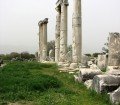
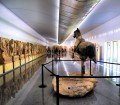
In addition, Karacasu has strong cultural potential. Aphrodisias is the most important cultural heritage site that has brought the district international recognition. The ancient city and the museum have a direct impact on the social and economic life of Karacasu. Visitor activity contributes to the district in areas such as guiding, transportation, food and beverage services, souvenirs, local product sales, and small-scale service sectors.
Cultural Tourism and Social Development
One of the most important opportunities for Karacasu’s social development is its cultural tourism potential. The inclusion of the Ancient City of Aphrodisias on the UNESCO World Heritage List has increased the international visibility of the district. This allows Karacasu to be evaluated not only as a rural district but also as a cultural route that contains a world-renowned archaeological heritage site.
For cultural tourism to contribute more strongly to the district, Karacasu center, Geyre, and the surrounding neighborhoods should be planned together. Instead of visiting only the ancient city and leaving, visitors should be encouraged to spend time in Karacasu center, visit traditional pottery workshops, experience local products, and discover the district’s historical housing fabric.
This approach can help diversify social life in Karacasu, support local tradespeople, create new employment areas for young people, and strengthen the local identity of the district. Integrating tourism with local life is an important development area for Karacasu’s social and economic future.
Current Social Issues and Development Areas
Some key issues stand out in Karacasu’s social structure. These include population decline, young people moving to larger cities, limited employment opportunities, an increasing elderly population in some neighborhoods, and limited social activity areas.
These issues are not unique to Karacasu. Similar trends are seen in many rural and inland districts across Türkiye. However, Karacasu’s strength lies in the fact that its cultural and natural values offer important opportunities for social development. Aphrodisias, traditional crafts, highlands, local cuisine, historical housing fabric, and rural life culture can increase the district’s social vitality when planned correctly.
To strengthen social life in Karacasu, the following areas can be prioritized:
Traditional crafts can be connected with education and tourism.
Culture, sports, and entrepreneurship programs for young people can be increased.
Routes can be prepared to help Aphrodisias visitors establish a stronger connection with Karacasu center.
Traditional houses and street texture can be preserved and transformed into a cultural heritage route.
Local producers can be supported through digital promotion and sales channels.
Social activities can be increased in rural neighborhoods.
Visibility can be provided for women producers, cooperatives, and local initiatives.
These efforts can help reduce Karacasu’s current social challenges while making its cultural and economic potential more visible.
Conclusion
The administrative and social structure of Karacasu should be evaluated together with its historical background, rural character, local production culture, and cultural identity shaped around Aphrodisias. The district has maintained its role as an important administrative center affiliated with Aydın since 1867, and after the metropolitan municipality reform, it transitioned into a new neighborhood-based local governance structure.
Socially, Karacasu has a distinctive structure shaped by strong neighborly relations, traditional occupations, rural production patterns, and cultural heritage. Although issues such as young population migration, limited social opportunities, and the need for economic diversification exist, the district’s strong values such as Aphrodisias, pottery, traditional houses, highlands, and local cuisine offer important opportunities for the future.
Today, Karacasu should be regarded not merely as a quiet rural district but as a settlement with a strong administrative past, rich cultural heritage, and high social development potential. The future of the district can become stronger through a balanced development model that improves the quality of life of local people, preserves cultural values, and creates new opportunities for younger generations.