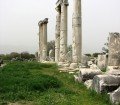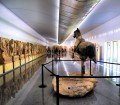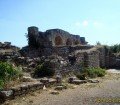
Aphrodisias takes its name from Aphrodite, the goddess associated with love, beauty, and fertility. The city is located near Geyre Neighborhood in the Karacasu district of present-day Aydın, within the ancient region of Caria. Founded in the fertile Dandalaz Valley, known in antiquity as the Morsynus Valley, the city became one of the most important centers of the ancient world through both its sacred identity and its marble sculpture tradition.
The name Aphrodisias became prominent especially from the Hellenistic period onward. However, before taking this name, the city was known by different names. In ancient sources and local narratives, the names Lelegonpolis, Megalopolis, Ninoe, Aphrodisias, Caria, and Geyre are associated with the settlement. These names show that the city did not belong only to the Roman period, but had a much older historical memory.
Early Settlement Periods
The settlement history of Aphrodisias and its surroundings is very old. Research carried out on the Acropolis, also known as Theater Hill, and on Pekmez Tepe has shown that the area was inhabited from prehistoric times onward. Current archaeological data indicate that the most intensive early settlement in the area dates to the Late Chalcolithic and Early Bronze Age, from the mid-5th millennium BCE to the 3rd millennium BCE.
Finds from these early settlements include pottery, stone tools, pithoi, figurines, and traces of daily life. This shows that Aphrodisias was a preferred settlement area long before the magnificent marble buildings of the Roman period. Fertile lands, water resources, and natural routes played an important role in the long-term habitation of the region.
The Cult of Aphrodite and the Rise of the City
From the 2nd century BCE onward, as Roman influence increased in Western Anatolia, Aphrodisias gained greater importance as a sacred center. The city’s dedication to Aphrodite played a decisive role in its relationship with the Roman world. The Aphrodite worshipped at Aphrodisias was not only the goddess of love and beauty known from classical Greek mythology. She was a distinctive cult figure combining the characteristics of a local Anatolian fertility goddess with the Hellenic image of Aphrodite.
The inscriptions on the stage building of the theater mention a golden statue of Eros that Julius Caesar is said to have dedicated to Aphrodite. This is important evidence of the special relationship Aphrodisias had with the highest political circles of Rome. Although it is not certain whether Caesar personally visited the city, this offering to Aphrodite increased the prestige of Aphrodisias in the Roman world.
A Privileged Relationship with Rome
After Caesar was assassinated in 44 BCE, political turmoil spread across Western Anatolia. Labienus and his forces, who supported Caesar’s assassins, captured and damaged Aphrodisias. After this event, Aphrodisias demonstrated its loyalty to Octavian and Mark Antony.
In return for this loyalty, the city was granted important privileges by a triumviral decree in 39 BCE. These privileges included tax exemption, the right of asylum for the temple, and autonomy. After Octavian became emperor under the title Augustus in 27 BCE, the close relationship between Aphrodisias and Rome continued.
In the 1st century CE, the emperors of the Julio-Claudian dynasty showed particular interest in Aphrodisias. In 22 CE, Tiberius renewed the privileges that had previously been granted by the Senate. This process shows that Aphrodisias was not merely a local sacred center, but a city with privileged status within the Roman Empire.
The School of Sculpture, Science, and Art
Between the 1st and 3rd centuries CE, the fame of Aphrodisias spread across a wide region, especially because of its school of sculpture. High-quality marble quarried from the Salbakos region, today’s Babadağ area, was worked by Aphrodisian craftsmen and used to fulfill commissions from different parts of the Roman world.
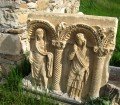
Aphrodisian artists were highly skilled in portrait statues, mythological figures, sarcophagi, reliefs, and architectural decoration. For this reason, Aphrodisias became an important production center known for high-quality marble craftsmanship throughout the Roman world.
The city also stood out not only in sculpture but also in science, literature, and philosophy. Chariton is an important author in the ancient novel tradition. Alexander of Aphrodisias is a major philosopher known for his commentaries on Aristotle. These figures show that Aphrodisias was not only a wealthy and magnificent city, but also a strong center of intellectual production.
Late Antiquity and Christianization
By the end of the 3rd century CE, Aphrodisias had become one of the important centers of the newly created province of Caria. Around 300 CE, the city rose to prominence as the metropolis of the province. This status shows that Aphrodisias preserved its administrative and political importance in the late period.
With the spread of Christianity in the 4th century CE, a new period began in Aphrodisias. A bishopric was established in the city, and some pagan buildings were adapted for Christian use. Nevertheless, the deeply rooted cult of Aphrodite and pagan traditions did not disappear immediately.
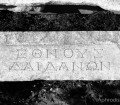
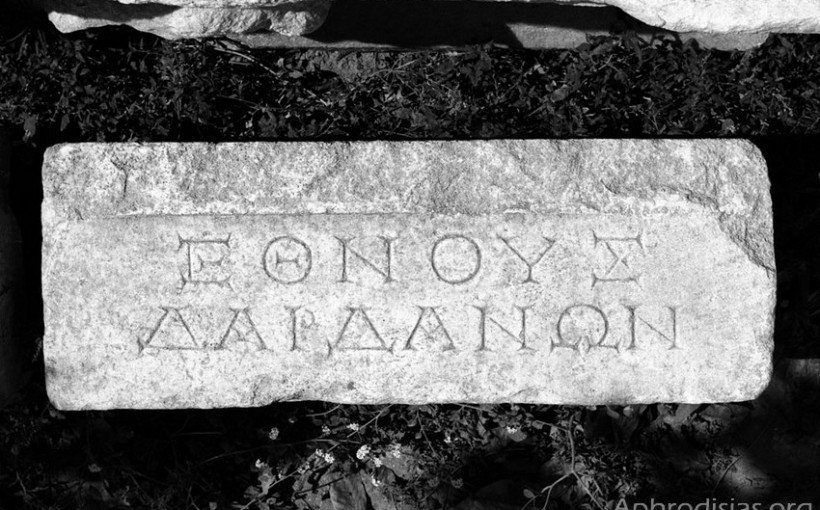
During the Christianization process, the words Aphrodisias and Aphrodisian were erased from some inscriptions. These interventions show that the city’s pagan identity was deliberately being suppressed. During this period, the city began to be called Stauropolis, meaning “City of the Cross.” However, the name Aphrodisias was never completely forgotten, and the name Caria also continued to be used in the Byzantine period. The modern name Geyre is thought to be connected with this historical chain of names.
Earthquakes, Walls, and the Weakening of the City
Because Aphrodisias was located in a geologically active region, it was affected by earthquakes throughout its history. Major earthquakes, especially in the 350s and 360s CE, caused serious damage to the city’s water channels and some of its buildings. After this damage, repairs were carried out and some public spaces were reorganized.
The city walls built in Late Antiquity reflect the changing security and defense needs of Aphrodisias. Approximately 3.5 kilometers long, the walls formed an important defensive line around the city center. Many marble blocks taken from earlier buildings were reused in these walls.
The earthquakes of the 7th century, raids from the east, religious conflicts, political and economic pressures, and other problems accelerated the weakening of the city. Although Aphrodisias managed to preserve much of its importance until this period, it could not regain its former grandeur after the 7th century. A fortress and watchpoint were created on the Acropolis, and the city gradually changed into a smaller, more defensive settlement.
Information about the period after the 7th century is more limited. Some settlement traces from the 11th century are mentioned. Between the 11th and 13th centuries, the region entered a new period with Seljuk raids and Turkmen settlement. Later, the area came under the influence of the Aydın and Menteşe beyliks. In the 15th and 16th centuries, the fertility of the plain encouraged new rural settlements, and the village of Geyre developed over the remains of the ancient city.
The Relocation of Old Geyre
Geyre was also affected by the major earthquakes of 1956. Although the village was not completely destroyed, authorities decided to move the settlement to another location. Thus, in the early 1960s, a new Geyre settlement began to be built approximately 2 kilometers west of the Byzantine walls.
This relocation process was highly important for the archaeological uncovering of Aphrodisias. The houses of old Geyre stood on and around some of the most important structures of the ancient city. After the village was moved, it became possible to excavate the theater, temple, agora, and other monumental buildings in a more systematic way. Expropriation and relocation continued until the late 1970s.
The First Excavations at Aphrodisias
Compared with cities such as Ephesus, Pergamon, and Miletus in Western Anatolia, Aphrodisias long received less attention. However, from the 18th and 19th centuries onward, travelers, researchers, and inscription specialists began to visit the city.
Among the first important researchers to visit Aphrodisias, draw its monuments, and copy its inscriptions were Charles Texier and members of the Society of Dilettanti in 1835. These studies contributed to the city becoming known in the European scholarly world.
It is reported that Osman Hamdi Bey wanted to carry out work at Aphrodisias in 1892, but this did not take place. In 1904, the French engineer Paul Gaudin began excavations at different points in Aphrodisias. In 1904 and 1905, work was carried out especially around the Temple of Aphrodite and the Baths of Hadrian, and many marble works were brought to light. After Gaudin, Gustave Mendel continued these studies.
In 1913, excavations were restarted by André Boulanger under the auspices of the French School at Athens. However, these works were interrupted by the First World War. In 1937, an Italian team led by Giulio Jacopi revived the excavations. This work also could not continue for long because of international political conditions.
The publications of Giulio Jacopi and Maria Floriani Squarciapino’s work “La Scuola di Afrodisia” contributed after the Second World War to a better understanding of the scholarly importance of Aphrodisias. Squarciapino’s studies were important because they showed that Aphrodisian sculptors were not merely copyists, but produced original and high-quality works.
Kenan Erim and the Modern Excavation Period
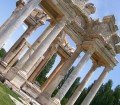
Systematic and long-term modern excavations at Aphrodisias began in 1961 through the initiatives of Prof. Dr. Kenan Erim. These works, carried out on behalf of New York University, brought the ancient city to international attention. During Kenan Erim’s period, the theater, stadium, Sebasteion, Temple of Aphrodite, Tetrapylon, agora, and many other structures were systematically investigated.
After Kenan Erim passed away in 1990, the Aphrodisias excavations continued with the contributions of New York University and later international scholarly teams. Today, excavation and research continue within a multidisciplinary framework involving archaeology, architectural history, epigraphy, conservation, urban planning, and museology.
Conclusion
Aphrodisias has a multilayered history extending from prehistoric settlements to the Hellenistic sacred area, from the magnificent marble city of the Roman period to the Christianized center of Late Antiquity, and finally to the modern settlement of Geyre. The city’s names, buildings, inscriptions, sculptures, and excavation history make the different phases of this long past visible.
The real strength of Aphrodisias lies not only in its monumental buildings, but also in the social, religious, political, and artistic continuity behind them. The cult of Aphrodite, the privileged relationship with Rome, the marble quarries, the school of sculpture, earthquakes, Christianization, the Geyre settlement, and modern excavations are the main components of this continuity.
Today, Aphrodisias is an archaeological heritage site of great importance not only for Karacasu and Aydın, but also for world cultural history.