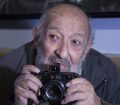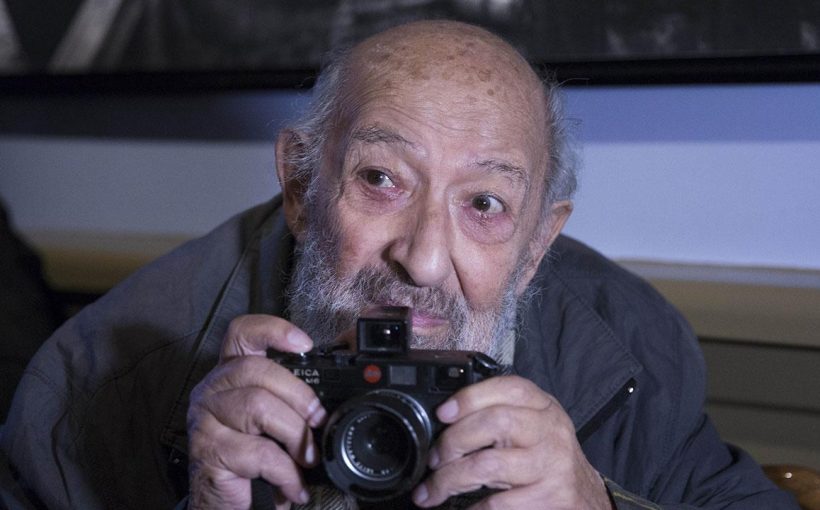
Ara Güler was born on August 16, 1928, in Beyoğlu, Istanbul. Widely regarded as one of the most important figures in photojournalism and documentary photography in Türkiye, Güler documented not only Istanbul but also Anatolia’s cultural heritage and many defining moments of the 20th century through his photographs.
During his childhood and youth, Ara Güler was deeply influenced by cinema. While still in high school, he worked in various roles at film studios. He graduated from Getronagan High School in 1951. Around the same period, he received training in theatre and acting from Muhsin Ertuğrul. His initial aim was to become a director or a playwright. During these years, his short stories were published in literary magazines and Armenian-language publications. Although he attended the Faculty of Economics at Istanbul University, he soon chose to pursue a career in photojournalism.
He began his journalism career in 1950 at the newspaper Yeni İstanbul. He later worked for some of the most prominent publications of the period, including Devir, Resimli Hayat, and Hayat. Until 1961, he served as the head of the photography department at Hayat magazine. From the 1950s onward, his collaborations with international publications such as Time, Life, Paris Match, and Stern helped his photographs reach audiences beyond Türkiye. His association with Magnum Photos also contributed to the international visibility of his photo essays.
In 1961, the British Journal of Photography Yearbook named him among the world’s leading photographers. In the same year, he was accepted into the American Society of Magazine Photographers. In 1962, he became known in Leica circles as a “Master of Leica.” Over time, his photographs were exhibited in various countries and featured in major international photography publications.
People, cities, and the passage of time occupy a central place in Ara Güler’s work. His photographs documenting Istanbul’s everyday life in the 1950s and 1960s, its streets, workers, fishermen, coffeehouses, ports, and changing architectural fabric, created a powerful visual memory that led him to be known as “The Eye of Istanbul.” Yet Güler’s interest was not limited to Istanbul. Historical sites, cultural heritage, archaeological remains, and changing ways of life across Anatolia also formed an important part of his photographic archive.
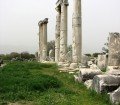
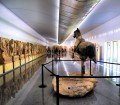
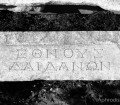
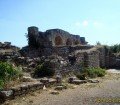
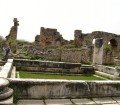
Among these works, Aphrodisias holds a special place. In 1958, Ara Güler traveled to the region to cover the opening of the Kemer Dam in Aydın. On his return journey, he reached the village of Geyre. There, he noticed that ancient remains were being used as part of everyday village life. The next day, he photographed the area. These images played an important role in drawing renewed national and international attention to Aphrodisias. The ancient city was already known to local communities, but Ara Güler’s photographs helped bring Aphrodisias to a wider global audience and increased interest among archaeological circles.
Ara Güler’s Aphrodisias photo essay was first published in Architectural Review in 1961. It later appeared in other international publications. During this period, Prof. Kenan T. Erim of New York University began long-term archaeological work at Aphrodisias. As a result, Güler’s photographs gained significance not only as aesthetic documents but also as historical testimony that helped make an important cultural heritage site more visible.
In later years, Güler returned to Aphrodisias and Geyre, continuing to document the transformation of the region. Through his lens, Aphrodisias was not merely an archaeological site made up of stones and ruins. It was a living place where the past and present were intertwined. The everyday relationship between the people of Geyre and the ancient remains changed over time, especially as the settlement was relocated and the archaeological identity of the site became more prominent. Ara Güler’s photographs became some of the most important visual records of this transformation.
Throughout his career, Güler photographed and interviewed many renowned figures, including Bertrand Russell, Winston Churchill, Arnold Toynbee, Pablo Picasso, Salvador Dali, Yaşar Kemal, and Fikret Mualla. He also contributed photographs to numerous publications in the fields of architecture, art history, archaeology, and cultural heritage. His work on the monuments of Mimar Sinan, Hagia Sophia, Mount Nemrut, and various regions of Anatolia established him not only as a photographer but also as a visual historian.
Ara Güler received many national and international awards throughout his life. In 2005, he was awarded the Turkish Presidency’s Grand Award for Culture and Arts. In 2009, he received the Lucie Awards Lifetime Achievement Award. In 2016, the Ara Güler Archive and Research Center was established. On August 16, 2018, on his 90th birthday, the Ara Güler Museum opened. Ara Güler passed away in Istanbul on October 17, 2018.
Today, Ara Güler’s photographs are regarded as powerful documents preserving the memory of Istanbul, Anatolia, and cultural heritage sites such as Aphrodisias. His work on Aphrodisias remains an important example of how a photographer’s perspective can contribute to the recognition and preservation of archaeological heritage.