Karacasu is a deep-rooted district located in the southeastern part of Aydın, with a history extending back to very early periods. With its mountainous geography, fertile valleys, traditional settlement fabric, and cultural heritage, Karacasu stands out not only for its present administrative identity but also for its historical continuity from antiquity to the Ottoman period and the Republic.
When examining the history of the district, Karacasu should not be considered in isolation. Its past must be read together with the nearby Ancient City of Aphrodisias, the settlement of Geyre, the geography of Caria, the settlement of Turkish tribes, the Aydınid Beylik, and Ottoman administration. For this reason, the history of Karacasu presents a multilayered structure that brings together both the ancient settlement tradition of Anatolia and the Turkish settlement history of Western Anatolia.
Early Settlement Traces and Antiquity
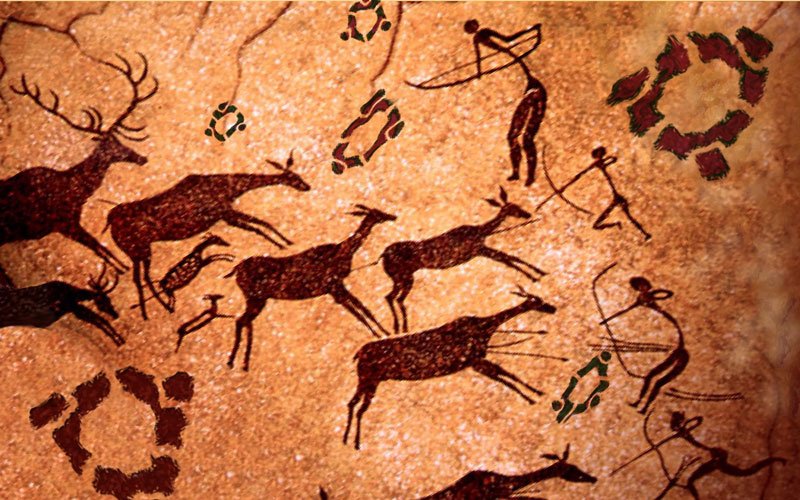
It is difficult to determine exactly when settled life began in and around Karacasu. However, archaeological research in the region shows that human presence dates back to very early periods. In particular, the finds from Aphrodisias and its surroundings near Geyre indicate that the region was inhabited not only in classical antiquity but also from prehistoric times onward.
The settlement history around Aphrodisias is associated with the Late Neolithic period. Finds from the ancient city and its surroundings show that the region has a history reaching back to the mid-5th millennium BCE. This means that the historical value of Karacasu should not be limited to the Roman period alone, but should also include earlier settlement phases.
The area where Aphrodisias is located lies on one of the important routes connecting Western Anatolia with the Mediterranean and Inner Anatolia. This location helped the region gain importance throughout history in terms of both settlement and cultural interaction. Ancient sources mention settlements associated with names such as Lelegonpolis, Megapolis, and Ninoe in this area. From the 2nd century BCE onward, the city began to come to prominence under the name Aphrodisias, associated with the cult of Aphrodite.
Aphrodisias and the Carian Identity
One of the most important elements of Karacasu’s history is its relationship with Caria. In antiquity, Caria was regarded as one of the important cultural regions of southwestern Anatolia. Aphrodisias was one of the most remarkable cities to develop within this geography.
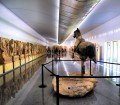
Aphrodisias experienced significant growth especially during the Roman period. The city’s rise was shaped by the cult of Aphrodite, its close political relationship with Rome, the high-quality marble quarries nearby, and its advanced sculptural tradition. Thanks to its proximity to marble quarries, the city became an important center of sculpture production and trained artists and craftsmen known across the Roman world.
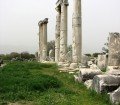
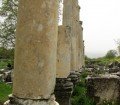
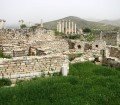
Today, the well-preserved stadium, theater, agora areas, Sebasteion, Tetrapylon, baths, inscriptions, and sculpture collections of Aphrodisias are among the main elements that make Karacasu’s historical heritage visible on a global scale. Therefore, when telling the history of Karacasu, Aphrodisias should not be presented merely as a nearby ancient city, but as one of the core historical values shaping the identity of the district.
The Byzantine Period and Regional Transformation
With the transformation of the Roman Empire and the spread of Christianity, Aphrodisias and its surroundings entered a new historical phase. During Late Antiquity and the Byzantine period, the pagan identity of the city weakened, and new religious and administrative structures connected with Christianity emerged.
During this period, the name Aphrodisias gradually lost prominence, and the city began to be known as Stauropolis. This change was not only a change of name, but also a sign of the religious and cultural transformation experienced by the region. The sacred identity centered on Aphrodite in antiquity was transformed into a Christian urban identity during the Byzantine period.
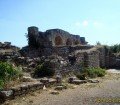
The Karacasu region maintained settlement continuity during the Byzantine period as well. However, the large urban structure of antiquity gradually weakened, and the region continued to exist through smaller settlements, rural living areas, and local centers. This process moved into a new historical phase with the settlement of Turkish tribes in the region in later centuries.
The Settlement of Turkish Tribes in the Region
The Turkish settlement history of Karacasu and its surroundings is associated with the settlement movements toward Western Anatolia after the Battle of Manzikert in 1071. During this period, Turkish tribes began to settle in and around Karacasu, gradually changing the ethnic, cultural, and social structure of the region.
According to local historical sources, the Eymür tribe, connected with the Dağhan branch of the Seljuks, settled around present-day Ataeymir. The Yazırlı branch of the Ayhan tribe made present-day Yazır and its surroundings their homeland. The Karasül clan, which came from these groups, is accepted as having founded Karacasu Village in the area where today’s Cuma Neighborhood is located.
These accounts show that Karacasu was an important center in terms of Turkish settlement history. Place names such as Ataeymir, Yazır, and Cuma Neighborhood carry traces connected with Oghuz tribes and Turkmen settlement in the historical memory of the region. For this reason, Karacasu can be considered one of the settlements in the Aegean Region that reflects the old Turkish settlement tradition.
Seljuk, Beylik, and Ottoman Periods
Between the 11th and 13th centuries, Karacasu and its surroundings were affected by the political struggles in Western Anatolia. The region came under Seljuk control at different times and later, during the Beylik period in Anatolia, remained under the influence of political powers such as the Menteşe Beylik and the Aydınid Beylik.
The Aydınid period was an important phase in which Turkish political and cultural presence strengthened in Western Anatolia. Karacasu and its surroundings also experienced the effects of inter-beylik struggles, settlement movements, and cultural transformations during this period. With the incorporation of the Aydınid Beylik into Ottoman rule in the first half of the 15th century, the political structure of the region changed, and Karacasu became part of the Ottoman administrative system.
Karacasu’s development during the Ottoman period was shaped by its rural settlement identity and local production structure. For a long time, the district continued to exist as an inland settlement developing through agriculture, animal husbandry, crafts, and local trade. Traditional pottery, leatherworking, blacksmithing, and rural production practices became the main fields shaping Karacasu’s historical economic identity.
From the Ottoman Administrative System to the Republic
During the Ottoman period, Karacasu was administratively connected to different centers. According to historical records, Karacasu was once mentioned as a village affiliated with the district of Yenişehir. In 1864, it became a subdistrict of Nazilli, and in 1867, it was attached to Aydın with district status.
This administrative change strengthened Karacasu’s role as a regional center. With the acquisition of district status, Karacasu formed a more distinct administrative unity with the surrounding villages and settlements. During the Republican period, Karacasu continued to exist as a district of Aydın and developed over time in terms of public institutions, local government, education, agriculture, and cultural services.
Today, Karacasu is administratively a district within the boundaries of Aydın Metropolitan Municipality. After the metropolitan municipality reform, former towns and villages were transformed into neighborhoods, and Karacasu’s settlement structure became part of the current neighborhood-based local governance system.
The Geographical Location of Karacasu
The geographical location of Karacasu has been decisive in its historical development. The district was established in a valley approximately 40 kilometers long, with Babadağ to the east and Karıncalı Mountain to the west. Its partly mountainous and rugged terrain has directly influenced Karacasu’s settlement pattern, transportation, agricultural production, and social life.
The district center is located approximately 90 kilometers from Aydın city center. To the east of Karacasu lies Babadağ district of Denizli, to the west Bozdoğan district of Aydın, to the north Kuyucak district of Aydın, and to the south Tavas and Kale districts of Denizli. This location makes Karacasu a natural transition area between Aydın and Denizli.
The most important stream in Karacasu is Dandalaz Stream. This stream, which reaches the Büyük Menderes River, is important for the region’s water resources, agricultural production, and historical settlement pattern. The location of Aphrodisias in the Dandalaz Valley, on a plateau at an elevation of approximately 600 meters, shows how decisive geography was in the development of the ancient city.
The Historical Identity of Karacasu
The historical identity of Karacasu was formed through the accumulation of different periods. When prehistoric settlement traces, the geography of Caria, the ancient heritage of Aphrodisias, the transformation of the Byzantine period, the settlement of Turkish tribes, the Beylik period, the Ottoman administrative structure, and the Republican period are considered together, Karacasu reveals a multilayered historical structure.
This multilayered structure also nourishes the district’s present cultural identity. Karacasu is not only a region that hosted important settlements in the past. It is also a distinctive district that brings together history, archaeology, rural life, traditional production, and cultural tourism today.
The inclusion of Aphrodisias on the UNESCO World Heritage List has made the historical value of Karacasu visible at an international level. However, the historical importance of Karacasu is not limited to Aphrodisias alone. Turkish settlement history, traditional neighborhood fabric, craft culture, and the administrative development of the Ottoman and Republican periods are also important parts of the district’s historical narrative.
Conclusion
Karacasu is a deep-rooted district that carries the traces of different cultures, political structures, and settlement traditions from prehistoric times to the present. While the finds around Aphrodisias show that the region was inhabited from very early periods, the ancient city became one of the strongest centers of the region during the Roman period.
The Turkish settlement that began after the Battle of Manzikert reshaped Karacasu’s social and cultural structure. The settlement memory associated with groups such as Eymür, Yazır, and Karasül strengthens the district’s place within Turkish history. With the Beylik and Ottoman periods, Karacasu became one of the local administrative and cultural centers of Western Anatolia.
Today, Karacasu is one of the most remarkable districts of Aydın with Aphrodisias, its traditional production culture, mountainous geography, neighborhoods, and historical memory. In this respect, the history of Karacasu is not only the story of a district’s past, but also an important example of the thousands of years of settlement, culture, and identity continuity in Western Anatolia.