Geyre is an important settlement affiliated with the Karacasu district of Aydın, whose historical identity has been largely shaped by the Ancient City of Aphrodisias. Today’s Geyre Neighborhood should be regarded not only as a rural settlement within Karacasu but also as a distinctive cultural environment associated with one of the most valuable archaeological sites in Anatolia.
The history of Geyre carries a strong settlement memory extending from antiquity to the present. The region’s past should be considered together with Caria, Aphrodisias, the Byzantine period, Turkish rule, the old Geyre settlement, the relocation of the modern village, archaeological excavations, and the UNESCO World Heritage process.
The Location and Historical Importance of Geyre
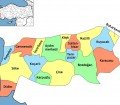
Geyre is located approximately 12 kilometers from the district center of Karacasu. The neighborhood is connected with Ataeymir, Ören, Yeşilyurt, Yazır, Işıklar, Palamutçuk, and the central settlement areas of Karacasu. With an average elevation of around 600 meters, the region has cooler summers and colder winters compared to nearby settlements.
This geographical structure has played an important role in making Geyre and its surroundings suitable for settlement throughout history. Dandalaz Stream, known in antiquity as Morsynus, is one of the important waterways that shaped the natural environment and settlement pattern of the region. The fertile valley, proximity to water resources, and nearby marble quarries were decisive factors in the development of Aphrodisias.
Today’s Geyre Neighborhood was formed after the relocation of the old Geyre settlement. Old Geyre was located on and around the area now known as the Aphrodisias Museum and archaeological site. For this reason, the recent history of Geyre is also the story of a village that once lived within an ancient city and later underwent a major transformation.
Geyre and Aphrodisias in Antiquity
The settlement history of the area around Geyre is very old. Research carried out in and around Aphrodisias shows that human presence in the region goes back to prehistoric periods. The traces of settlement around the ancient city are not limited to the Roman period. From prehistoric times onward, the region was an important settlement area in the inland parts of Western Anatolia.
Ancient sources mention several names associated with settlements in this region. Names such as Lelegonpolis, Megapolis, and Ninoe are linked to the settlement memory before Aphrodisias. From the 2nd century BCE onward, the city began to stand out under the name Aphrodisias. This name is connected with Aphrodite, the patron goddess of the city.
Aphrodisias was initially a small-scale settlement, but it developed significantly during the Roman period. The city’s close political relationship with Rome enabled it to gain privileges such as autonomy and tax exemptions. These privileges contributed to the economic, artistic, and architectural growth of Aphrodisias.
The Rise of Aphrodisias in the Roman Period
Aphrodisias became one of the most important centers of the Caria region during the Roman period. Three main elements shaped the city’s rise: the cult of Aphrodite, high-quality marble quarries, and a strong sculptural tradition.
The marble quarries located on the slopes of Babadağ, northeast of the city, were among the main resources that made Aphrodisias known in the ancient world. The quality of the local marble and the proximity of the quarries to the city made it easier for a powerful school of sculpture to develop there. Sculptors from Aphrodisias became known especially during the Roman Imperial period for portraits, reliefs, monumental structures, and religious imagery.
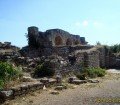
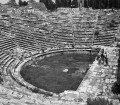
Today, structures such as the Tetrapylon, Sebasteion, Temple of Aphrodite, Stadium, theater, agora, bath complexes, and Bouleuterion show the architectural and artistic strength of Aphrodisias in the Roman period. These monuments reveal that the city was not only a religious center but also an important urban space where political, cultural, artistic, and social life was concentrated.
The Byzantine Period and the Name Stauropolis
After its flourishing development during the Roman period, Aphrodisias continued to maintain its importance in different ways during Late Antiquity and the Byzantine period. As Christianity became stronger in the region, the city’s pagan identity gradually began to transform. The Temple of Aphrodite was adapted for Christian worship, and some buildings in the city acquired new functions.
During this process, the name Aphrodisias gradually lost prominence because of its pagan associations, and the city began to be known as Stauropolis. Stauropolis means “City of the Cross.” In later periods, the name Caria was also used for the city and its surroundings. The name Geyre is commonly accepted as a Turkish form associated with Caria.
These changes in name clearly reflect the cultural and religious transformations that the region experienced over time. Aphrodisias was associated with the cult of Aphrodite in antiquity, came to the forefront with a Christian identity in the Byzantine period, and later gained a new settlement memory under the name Geyre after Turkish rule.
Turkish Rule and the Formation of the Geyre Settlement
The region was affected by political changes in Anatolia between the 11th and 13th centuries. After the Battle of Manzikert, Turkish groups moving into Western Anatolia began to settle in and around Karacasu. Over time, the region came under the influence of political powers such as the Anatolian Seljuks, the Menteşe Beylik, and the Aydınid Beylik.
After Aphrodisias lost its former splendor, a new village settlement emerged on and around the ruins of the ancient city. This settlement gradually became known as Geyre Village. The people of old Geyre lived side by side with the remains of the ancient city for a long time. Ancient stones, architectural fragments, columns, and inscribed blocks became part of everyday village life.
This is highly important for the history of Geyre. Old Geyre was one of the rare examples where an ancient city and modern rural life existed together. Village houses, roads, fountains, courtyards, and daily-use spaces continued to exist in the same environment as the remains of the ancient city. This coexistence later became an important issue for archaeological protection and excavation work.
The Beginning of the Aphrodisias Excavations
The first archaeological excavations at Aphrodisias were carried out in 1904 and 1905 by the French engineer and researcher Paul Gaudin. These early studies were important for the scientific recognition of the ancient city. However, the systematic and long-term excavation history of Aphrodisias essentially began in 1961.
In 1961, scientific excavations were launched on behalf of New York University under the direction of Prof. Dr. Kenan T. Erim. The work led by Kenan Erim played a decisive role in bringing the Ancient City of Aphrodisias to international attention. Through the excavations, the city’s monumental structures, sculpture workshops, inscriptions, reliefs, and urban fabric were uncovered using scientific methods.
As the excavations progressed, the Aphrodisias Museum also became one of the most important cultural institutions in the region. Sculptures, reliefs, inscriptions, and architectural pieces unearthed from the ancient city were presented to visitors through the museum. In this way, Geyre gained an identity not only as a village settlement but also as a neighborhood hosting one of Türkiye’s most important centers of archaeology.
The Relocation of Geyre Village
Old Geyre Village existed for many years on and near the remains of the Ancient City of Aphrodisias. However, the earthquake risk in the region, the need to protect archaeological remains, and the development of scientific excavations made the relocation of the settlement necessary.
The relocation of Geyre to its present settlement area took place in the second half of the 20th century. This process was not a simple move completed at once, but a gradual transformation from old village life to a new settlement. The area of old Geyre is now identified with the Aphrodisias Museum and the archaeological site.
The relocation of the village was an important turning point in the social history of Geyre. The local population, who had lived among ancient remains in the old settlement, moved to modern houses and a different spatial arrangement in the new settlement area. This transformation helped protect the archaeological heritage and opened a new chapter in the daily life of the people of Geyre.
Excavations After Kenan Erim
Prof. Dr. Kenan T. Erim directed the Aphrodisias excavations for many years and helped establish the ancient city’s reputation in the international scholarly world. After his death in 1990, the excavations continued from 1991 under the direction of Prof. Dr. R. R. R. Smith. Today, excavation, documentation, conservation, and publication work continues through international academic collaborations.
Modern excavation work does not focus only on uncovering new structures. It also aims to protect existing monuments, document previously excavated material, present the monuments more clearly to visitors, and publish all historical phases of the city in a scientific manner. For this reason, the Aphrodisias excavations are among the most important examples of long-term and disciplined archaeological research in Türkiye.
Archaeological Site Status and Conservation Process
The Ancient City of Aphrodisias and its surroundings have been placed under protection because of their archaeological value. Protecting the area is essential both for the continuation of scientific research and for passing the ancient city on to future generations.
The city walls, monumental buildings, inscriptions, sculpture workshops, marble quarries, and settlement layers of Aphrodisias show that the region is a heritage site requiring protection not only locally but also internationally. For this reason, settlement, agricultural use, infrastructure, and tourism activities in Geyre should be evaluated in line with the archaeological site status and conservation principles.
The conservation process represents both a responsibility and an opportunity for Geyre Neighborhood. On one hand, the needs of local life must be considered. On the other hand, the cultural heritage of Aphrodisias must be protected without damage. This balance is one of the key issues for the future of Geyre.
The UNESCO World Heritage Process
Aphrodisias was inscribed on the UNESCO World Heritage List in 2017. This status shows that the value of the ancient city is recognized internationally not only for Türkiye but also for the history of humanity. The UNESCO World Heritage inscription is based on the city’s well-preserved urban fabric, marble sculpture tradition, monumental buildings, inscriptions, cult of Aphrodite, and ancient marble quarries.
This process is also highly important for Geyre. Geyre is the living settlement associated with the Ancient City of Aphrodisias. Visitors who come to the ancient city also encounter the present-day social and cultural environment of Geyre. Therefore, the promotion of Geyre should be considered together with the historical value of Aphrodisias.
Geyre’s Local Memory
The history of Geyre is not limited to antiquity. The life that old Geyre Village maintained on the ancient city, the relocation of the village, the beginning of the excavations, Ara Güler’s photographs of Aphrodisias, Kenan T. Erim’s work, the development of the museum, and the UNESCO process are among the main elements that form Geyre’s recent memory.
This local memory is as valuable as the archaeological heritage itself. Geyre is a special example where the past and present stand side by side. The stones of the ancient city, the memories of old village life, the formation of the new settlement, and modern conservation practices are all parts of the same historical narrative.
For the future of Geyre, preserving this memory is important. Old photographs, oral history projects, local people’s memories, testimonies about the relocation of the village, and documents related to archaeological excavations can make Geyre’s cultural identity more visible.
Conclusion
Although Geyre is a small neighborhood affiliated with the Karacasu district of Aydın, it is not an ordinary settlement because of its historical depth. The Ancient City of Aphrodisias, the Aphrodisias Museum, Caria history, the Roman period, the Byzantine period, the relocation of Geyre Village, the Aphrodisias excavations, and UNESCO World Heritage status are the main elements that shape Geyre’s identity.
Today, Geyre is a distinctive settlement that lives next to a world-renowned cultural heritage site while carrying traces of the past. The history of Geyre is a strong example of how the legacy of an ancient city and the life of a modern neighborhood can become intertwined. Therefore, understanding Geyre means understanding not only the past of a neighborhood but also the place of Aphrodisias in Anatolian and world cultural history.



![[:tr]Prof. Dr. Kenan Erim[:]](https://www.aphrodisias.org/wp-content/uploads/2014/12/prof-dr-kenan-erim-120x105.jpg)